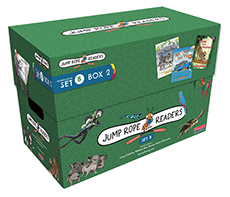
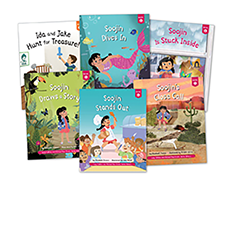
Jump Rope Readers
Fiction and Nonfiction Decodable Books
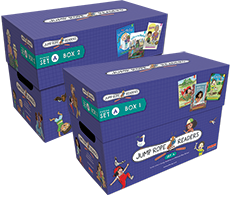
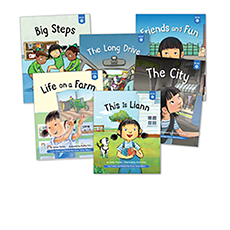
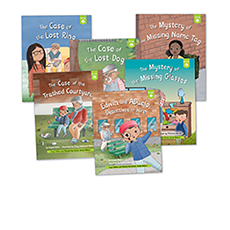
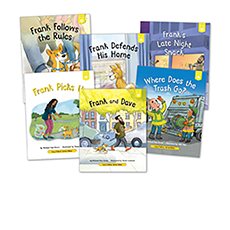
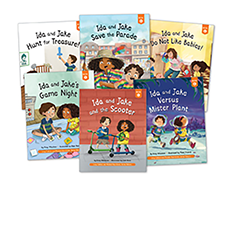
The Jump Rope Readers are a collection of fiction and nonfiction decodable books that support and reinforce phonics instruction with engaging stories and characters kids love. Now Aligned to UFLI!
Support Systematic Phonics Instruction with the Jump Rope Readers
The Jump Rope Readers support systematic phonics instruction by giving beginning readers hands-on practice in connected texts, helping them apply newly learned skills in a clear, scaffolded way. Supported by research, these engaging fiction and nonfiction decodable texts build fluency, comprehension, and confidence step by step—providing the explicit practice students need.
Download the Brochure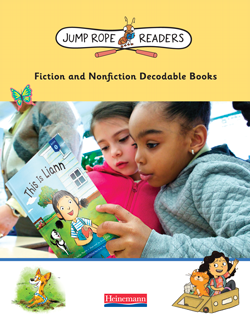
Phonic Decoding Assessment
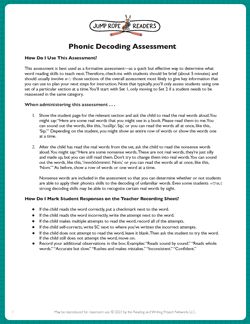
Phonic Decoding Assessments are an efficient tool to determine what phonics skills students know and what they need additional help with. The data you gather will help you match readers with decodable books that provide relevant practice and inform your instruction.
This formative tool includes Teacher Recording Sheets and Student Pages, organized by skill level—from CVC words with short vowels (a, i, o) to multisyllabic words. The clear progression makes it easy to assess and track what your students have mastered and what to teach next.
Free Phonic Decoding AssessmentScope and Sequence
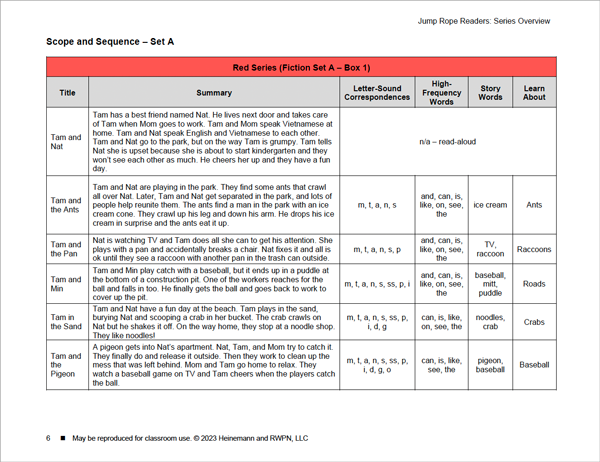
The Jump Rope Readers follow a progression from simpler to more complex phonics content:
- short vowels and consonants
- blends and digraphs
- silent E
- vowel teams
- R-controlled vowels
- diphthongs
- multisyllabic words

A Staircase and a Landing
The fiction series begins very simply, introducing a new phonics concept along with one or two high-frequency words in each book. From there, each book builds on previous books, introducing one or two letter-sound correspondences along with a couple new high-frequency words.
Once students finish a fiction series, they can move to the corresponding nonfiction books. The Nonfiction decodables offer a sequence of landings for readers to pause, review, and practice what they have learned up to that point, while learning about new content in a new genre.
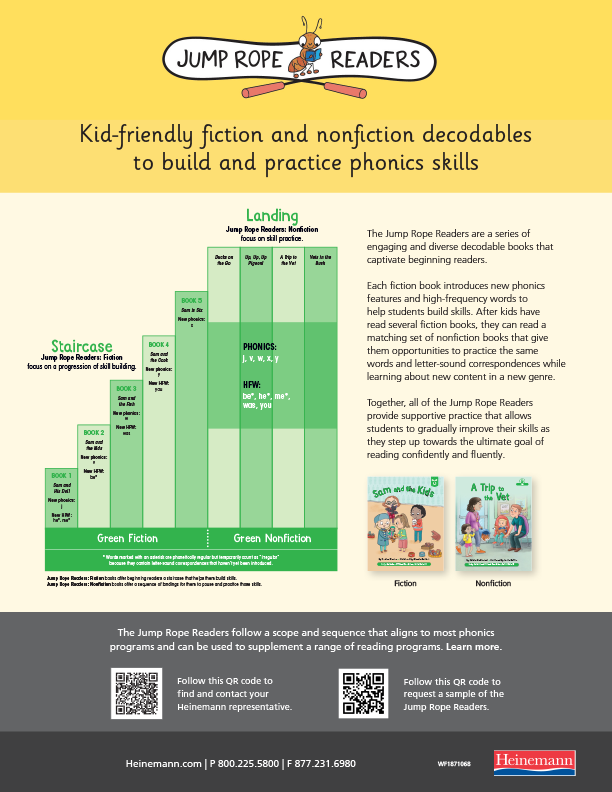
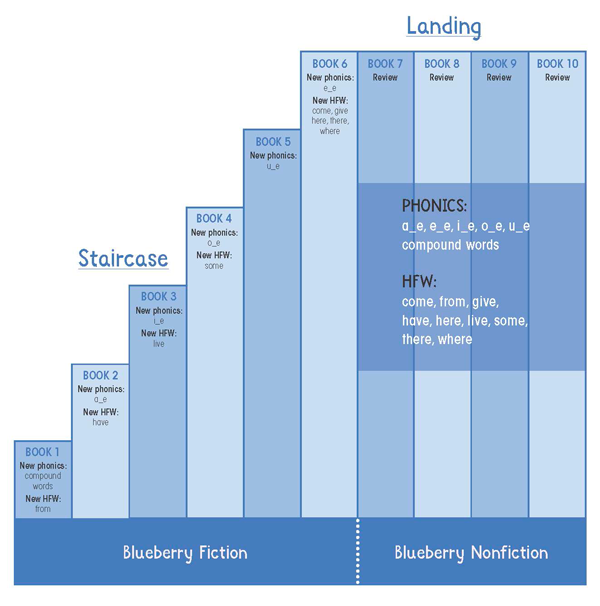
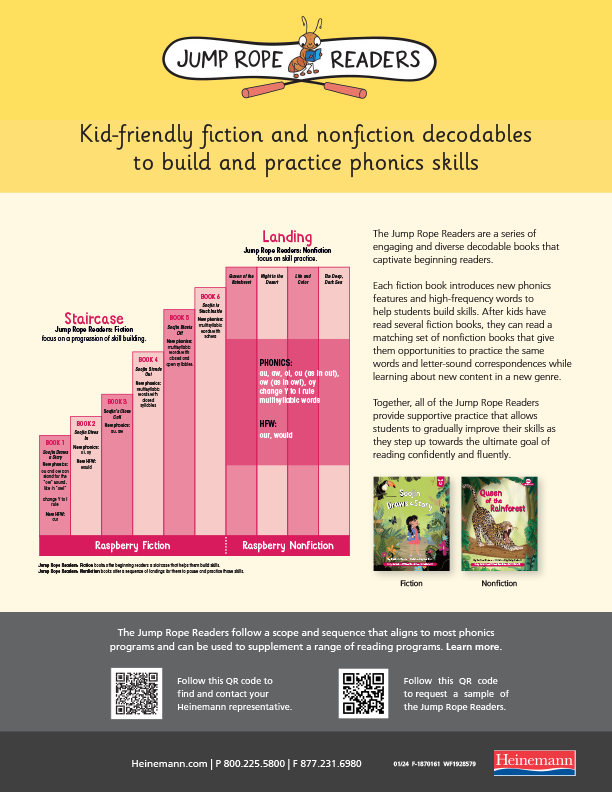
Hear more about the phonics progression and how the fiction and nonfiction decodables work together.
Jump Rope Readers Fiction
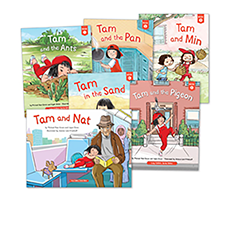
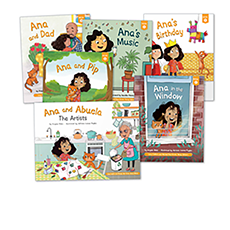
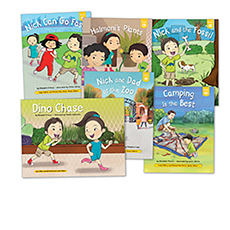
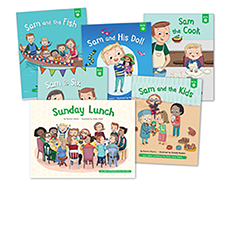
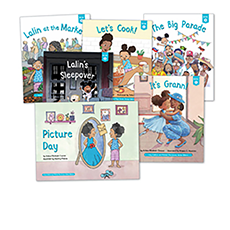
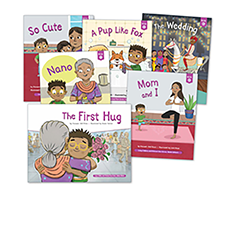
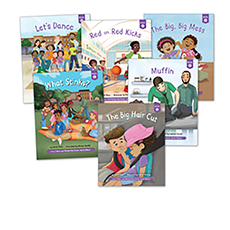
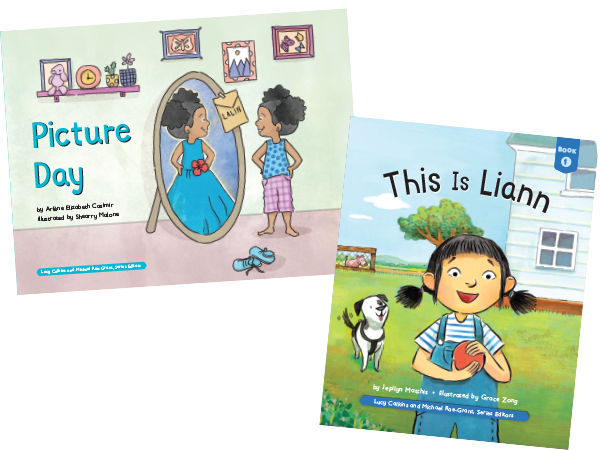
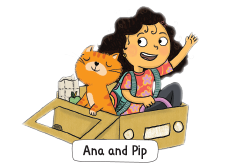
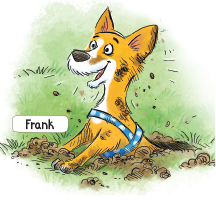
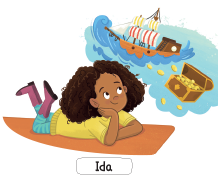
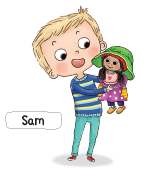
Each series stars a distinct main character that students will enjoy getting to know—and see themselves in. Readers get to know these characters and their diverse families across each series. Series books are engaging for kids, which makes them especially comprehensible.
All of the Jump Rope Readers take place in the same dynamic, inclusive urban neighborhood, so characters from earlier books make guest appearances in later ones. Once kids come to know who the characters are, they know what to expect, and this helps them follow the story.
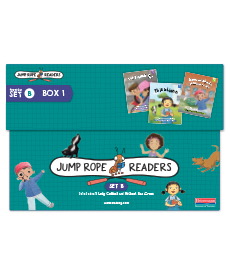
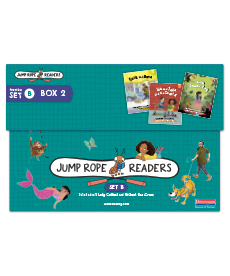
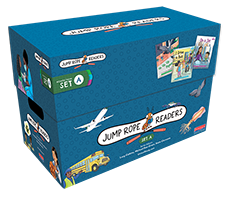
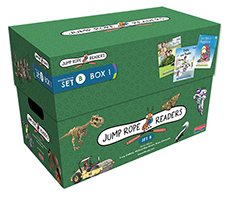
To ensure kids understand the key characters and their relationships, each series begins with a "book one" that lays out these elements. In set A, "book one" is a picture book teachers can read aloud to kids. In set B, it's a decodable book kids can read on their own.
Jump Rope Readers Nonfiction
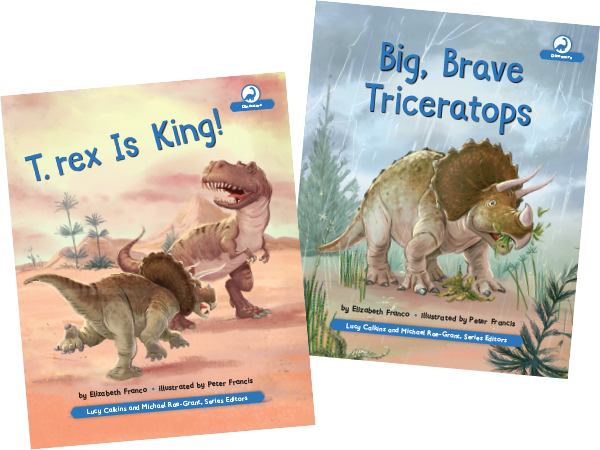
Each Jump Rope Readers nonfiction book includes words that students can read on topics they want to read about. With a clear overall structure and central idea, they support beginners' understanding.
The Jump Rope Readers nonfiction decodables are typically paired together, so that students can read two books on the same topic. These deliberate pairings allow students to make connections, synthesize across books, and compare and contrast the information they are learning.
In addition, nonfiction text features include a picture glossary of new words, tables of content, chapter headings, labeled diagrams, maps, and picture graphs to extend students' understanding.
Research
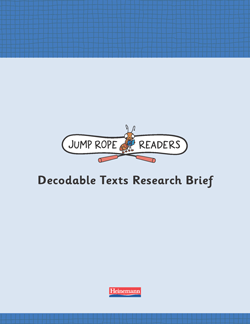
Decodable texts are supported by decades of research. Studies show that systematic, explicit phonics instruction—paired with practice in decodable texts—is the most effective way to teach early reading skills. By giving children texts that match their phonics knowledge, we set them up for success and prevent the frustration that can come from encountering words beyond their skill level.
The Jump Rope Readers follow a systematic research-based phonics progression.
Alignments
Decodable texts are supported by decades of research. Studies show that systematic, explicit phonics instruction—paired with practice in decodable texts—is the most effective way to teach early reading skills. By giving children texts that match their phonics knowledge, we set them up for success and prevent the frustration that can come from encountering words beyond their skill level.
The Jump Rope Readers follow a systematic research-based phonics progression.
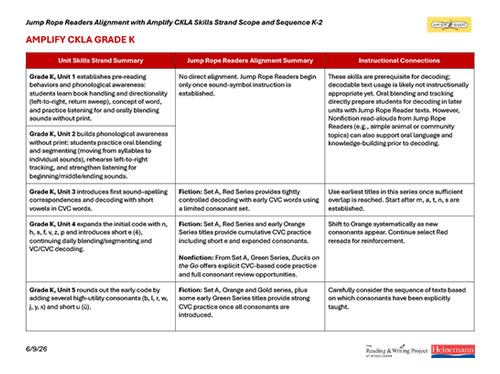
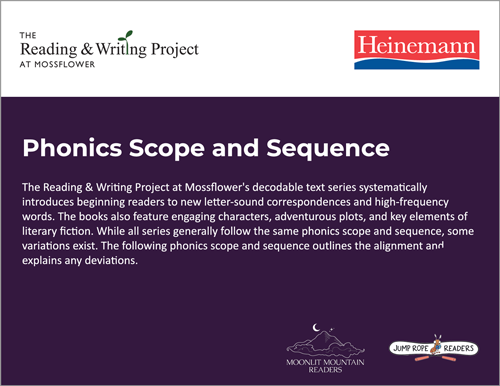
See how the Jump Rope Readers structured phonics scope and sequence aligns to popular core reading programs and complements other decodable readers.
Related Insights and Resources

Jump Rope Readers: 8 Ideas for Using Decodable Books in Your Classroom
There are many ways to use Jump Rope Readers in your classroom. Like all decodable books, they can support whole class lessons, small group work, and independent practice. Here are 8 ideas to help get you started.

Tips for Using The Jump Rope Readers Nonfiction Decodable Books
The Jump Rope Readers Nonfiction decodables were created for K–2 students. With words that students can read and, just as importantly, full of topics they will want to read, they are just right for beginning readers.

Jump Rope Readers: How to Use Decodable Books to Plan Small Groups
As every K-2 teacher knows, small groups can make a big difference. In small groups, we can offer our young students lots of differentiation, feedback, and encouragement—all of which help them grow by leaps and bounds.